

Scroll through any dental clinic’s website and the treatment list can start to blur together — crowns, veneers, whitening, bonding, implants. They all promise a better-looking smile, but they solve very different problems, last for different lengths of time, and suit different budgets. Here’s a straightforward breakdown of the three most commonly asked-about options, so you can walk into a dental consultation already knowing which questions to ask.
What Each Treatment Is Actually For
The easiest way to think about these treatments is by the problem they solve, not just the result they produce.
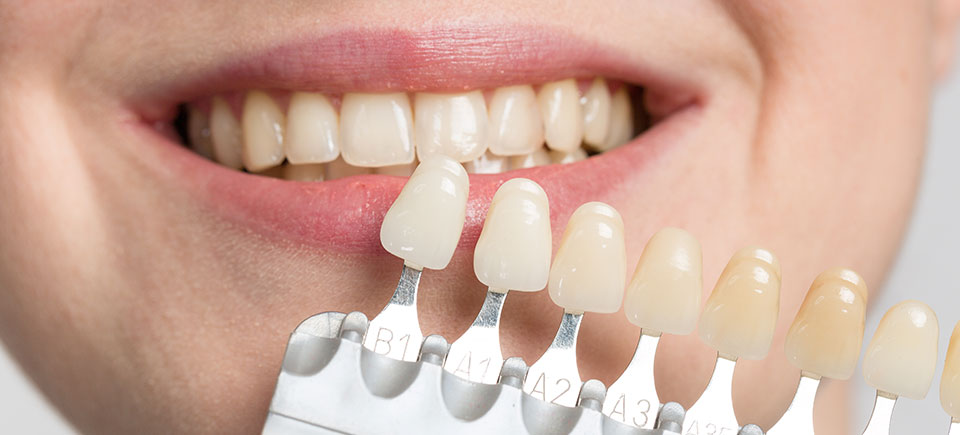
Whitening is purely cosmetic and addresses colour only. It doesn’t change the shape, strength, or position of a tooth — it simply lifts staining and discolouration that’s built up on the enamel over time from things like coffee, tea, red wine, or ageing. It’s the right starting point for someone whose teeth are structurally healthy but have lost some of their natural brightness.
Veneers are thin shells, usually made from porcelain or a composite resin, bonded to the front surface of a tooth. They’re generally used to improve the appearance of teeth that are chipped, slightly misaligned, unevenly shaped, or discoloured in a way whitening can’t fix. Veneers change the way a tooth looks from the front but leave most of the underlying tooth structure in place.
Crowns are a different category altogether — they’re a restorative treatment first and a cosmetic one second. A crown is a cap that covers the entire visible portion of a tooth, and it’s typically recommended when a tooth is cracked, heavily decayed, weakened by a large old filling, or has had root canal treatment. Rather than just improving appearance, a crown restores the strength and function of a tooth that might otherwise need to be extracted.
How Long Each One Typically Lasts
Longevity is one of the most common questions patients ask, and it varies with the treatment, the materials used, and how well the teeth are cared for afterwards.
Whitening results are the least permanent of the three. Depending on diet and habits like smoking or coffee consumption, results generally fade over time and often need topping up every so often to maintain the effect.
Veneers tend to last considerably longer — commonly cited as somewhere in the range of a decade or more with good care — though this depends heavily on the material chosen and how they’re looked after. They can chip or come away from the tooth if bitten into very hard foods, so most dentists recommend a bit of care around things like ice or fingernails.
Our Crowns Gold Coast are generally built to withstand the full biting force of a tooth and, with good oral hygiene and regular check-ups, are often expected to last many years, sometimes decades. Because a crown fully encases the tooth, it also tends to hold up well to everyday wear compared to a thinner cosmetic shell.
As with any dental treatment, these are general timeframes rather than guarantees — the right dentist can give a more specific estimate based on an individual’s teeth and habits.
Which One Suits Your Concern?
A useful way to narrow down the options is to start with what’s actually bothering you.
If the concern is simply that teeth look dull, yellowed, or stained compared to how they used to look, whitening is usually the first and least invasive option to try. It requires no alteration to the tooth itself and is often the most affordable entry point into cosmetic dentistry.
If the concern is about the shape or alignment of teeth — a chip, a gap, or teeth that look a little uneven — but the teeth themselves are structurally sound, veneers are often the more suitable option. They offer more control over the finished look than whitening alone, since a dentist can adjust shape, symmetry, and shade all at once.
If there’s an underlying structural issue — pain when chewing, a tooth that’s cracked, a large filling that keeps failing, or a tooth that’s had root canal treatment — this is where a crown becomes the relevant conversation. In these cases, the priority shifts from appearance to keeping the tooth functional and intact, with the cosmetic improvement coming as a welcome side effect rather than the main goal.
It’s also worth knowing that these treatments aren’t mutually exclusive. Some people whiten their natural teeth first, then look at veneers for a couple of specific teeth. Others need a crown on one damaged tooth while the rest of their smile stays untouched. A dental consultation is really about identifying which category each tooth falls into, rather than assuming one treatment fits the whole mouth.
Getting Proper Advice Before Deciding
Because these treatments range from purely cosmetic to fully restorative, the safest approach is always a proper in-person assessment rather than guessing based on a photo or a friend’s experience. An experienced dentist can examine the health of the tooth underneath, not just how it looks, and recommend the option that actually addresses the root cause — whether that’s a whitening kit, a veneer, or in cases involving damaged or weakened teeth, a crown. Clinics such as Soul Dental on the Gold Coast, for example, typically offer an initial consultation where these options can be discussed and matched to the individual’s specific teeth and goals.
Ultimately, a great-looking smile and a healthy, functional one usually go hand in hand — which is exactly why getting the diagnosis right matters as much as picking the treatment that sounds most appealing.
