

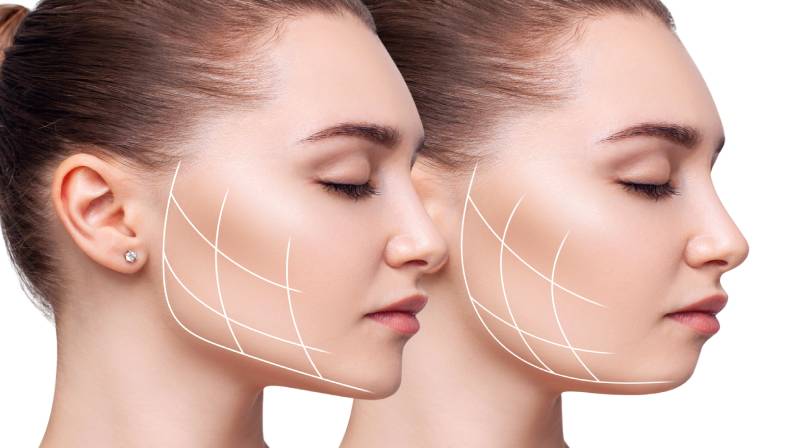
When people consider ways to refresh their facial appearance or turn back the clock on aging, they typically look to dermatology or plastic surgery. Treatments like dermal fillers, face lifts, and skin tightening procedures dominate the conversation. However, the true foundation of facial aesthetics lies deeper than the skin and subcutaneous fat. The structural integrity of the lower third of your face depends almost entirely on your teeth and jawbone.
Advanced dentistry has evolved far beyond filling cavities and cleaning teeth. Today, neuromuscular, restorative, and cosmetic dental practices play a pivotal role in reconstructing facial profiles. By addresses the underlying hard tissues of the mouth, modern dental interventions can fundamentally reshape a weak, collapsing, or asymmetrical jawline, offering a permanent form of rejuvenation that topical treatments cannot match.
The Biological Connection Between Your Teeth and Jaw
To understand how dentistry can alter your profile, it is necessary to examine how the lower face maintains its shape. The maxilla (upper jaw) and mandible (lower jaw) provide the physical scaffolding for your lips, cheeks, and chin.
Your teeth are not just tools for chewing. They act as placeholders that maintain the correct vertical dimension of your face. When you close your mouth, the height of your teeth determines the distance between the tip of your nose and the base of your chin. If this distance shortens due to worn down, broken, or missing teeth, the lower face compresses.
Furthermore, teeth are anchored into the alveolar bone, a specialized section of the jawbone. This bone requires constant physical simulation to stay healthy. Every time you bite and chew, the forces travel down the roots of your teeth and signal to your body that the bone tissue is needed. The body responds by continuously sending nutrients and calcium to remodel and reinforce that specific area.
The Hidden Cause of a Receding Jawline
When you lose a tooth, or when your teeth wear down significantly from chronic grinding, that vital mechanical simulation stops. Without pressure from tooth roots, the body interprets the surrounding jawbone as redundant material. It begins a biological process called bone resorption, where the body breaks down and absorbs the bone minerals to use elsewhere.
The consequences of bone resorption change your physical appearance in several predictable ways:
-
The chin moves closer to the nose: As the bone shrinks and tooth height decreases, the lower jaw over closes. This creates a collapsed look often referred to as a sunken profile.
-
The jawline loses definition: The sharp, distinct border of the mandible softens, causing the skin around the neck and jaw to sag, creating jowls.
-
The lips thin out: Without the hard support of the teeth and bone pushing forward, the lips turn inward and flatten.
-
Wrinkles deepen: The loss of structural volume causes the skin to bunch up, making the lines running from the nose to the corners of the mouth become much more pronounced.
This structural collapse can happen even if you have all your teeth but suffer from severe wear due to stress induced grinding, acid reflux, or poor alignment.
Restorative Approaches That Rebuild Your Profile
Advanced dental treatments tackle this structural decline by addresses the root cause of the volume loss. Instead of pulling the skin tight over a shrinking frame, dentists rebuild the frame itself.
Dental Implants and the Preservation of Bone
Dental implants represent the gold standard for preserving and restoring jaw structure. Unlike traditional dentures or bridges, which sit on top of the gums, an implant utilizes a titanium post that is surgically inserted directly into the jawbone.
Because titanium is biocompatible, it undergoes a process called osseointegration, where the living bone fuses directly to the metal surface. The implant acts exactly like a natural tooth root. When you chew, it transmits forces into the surrounding bone, halting the resorption process entirely and encouraging the body to maintain the density and shape of your jawline.
Bone Grafting for Structural Mass
If a patient has been missing teeth for a long time, they may have already lost too much bone to support an implant. In the past, this meant a permanent change to their facial profile. Today, advanced bone grafting techniques allow dentists to rebuild the lost architecture of the jaw.
By utilizing synthetic materials, processed donor tissue, or bone taken from another part of the patient’s body, a specialist can pack new matrix material into areas of low density. Over several months, the body replaces the graft material with natural, strong bone. This not only prepares the site for implants but physically restores the width and height of the jaw, instantly providing better support for the overlying skin.
Full Mouth Reconstruction and Changing the Bite
For patients who have suffered widespread dental damage, severe wear, or trauma, a full mouth reconstruction might be necessary. This comprehensive approach combines various disciplines, including crowns, veneers, onlays, and sometimes orthodontic movement, to completely redesign how the upper and lower teeth meet.
Neuromuscular dentistry is often used during this process to find the optimal resting position of the jaw. By measuring the activity of the facial muscles, dentists can identify if your current bite is forcing your jaw into an unnatural, recessed position. By building up the height of the teeth with durable ceramic materials, the dentist can permanently guide the lower jaw forward into a more prominent, aesthetically pleasing position while relieving chronic muscle tension and headaches.
The Aesthetic and Functional Transformation
The ultimate result of correcting the hard structures of the mouth mirrors the outcomes of invasive plastic surgery, yet it looks entirely natural because it aligns with your true anatomical blueprint.
When the vertical dimension of your face is restored, the skin over the lower jaw naturally tightens. Jowls are minimized, the chin appears more defined, and the neck profile elongates. Because the teeth are restored to their proper positions, the lips receive adequate support, instantly appearing fuller without the use of artificial fillers.
Beyond appearance, restoring your jawline fixes major functional issues. It improves your ability to chew a balanced diet, corrects speech clarity, protects your jaw joints from long-term degeneration, and ensures your airway remains open during sleep, which reduces the risk of obstructive sleep apnea.
Frequently Asked Questions
Can standard clear aligners or traditional braces improve the appearance of my jawline?
Orthodontics can alter your jaw profile, particularly in younger patients whose bones are still growing. In adults, moving the teeth can change the angle of the lips and the symmetry of the smile, which alters the perception of the jawline. However, if the underlying issue is a severe mismatch in bone size or significant bone loss, orthodontics alone cannot fix the jawline without being paired with restorative treatments or surgical jaw alignment.
How do I know if my flat profile is caused by my teeth or just genetics?
A dental professional can determine the cause through digital panoramic X-rays and three-dimensional imaging. If your imaging shows a healthy bone mass and your teeth are properly aligned with correct height, your profile is likely genetic. However, if the scans reveal a compressed bite, worn down enamel, or areas of low bone density where teeth are missing, your teeth are directly impacting your facial structure.
Will traditional removable dentures prevent my jawline from collapsing?
No, traditional removable dentures do not prevent bone loss. Because they sit on top of the gum tissue, they do not stimulate the underlying bone. In fact, the constant pressure of a loose denture rubbing against the ridge can sometimes accelerate the rate of bone resorption, causing the jawline to shrink further over time. Only implant-supported options provide the necessary internal stimulation to save the bone.
Is there an age limit for undergoing jawline rejuvenation through advanced dentistry?
There is no upper age limit for these procedures. The primary requirement is good overall health and adequate bone density, or a willingness to undergo bone grafting to build up the site. Patients in their seventies and eighties regularly undergo full mouth reconstructions and dental implant placement safely, enjoying both the aesthetic lift and the restored ability to eat comfortably.
How long does the process of restructuring the jawline typically take?
The timeline varies wildly depending on the complexity of your case. A straightforward full mouth rejuvenation using ceramic crowns to restore tooth height can sometimes be completed in just a few weeks. However, if your treatment plan requires bone grafting and dental implants, the process can take anywhere from six months to a year, as the bone requires time to heal and integrate before final restorations are placed.
Are the facial changes from dental reconstruction permanent?
Yes, the structural changes achieved through implants and permanent restorations are designed to be long-lasting. Unlike dermal fillers that dissolve within months, or surgical face lifts that can sag after a decade as skin continues to age, rebuilding the bony foundation provides a permanent change to your skeletal framework. Maintaining excellent oral hygiene and wearing a nightguard if you grind your teeth will ensure the results last for decades.
